Dog breeds that are hardest to groom at home
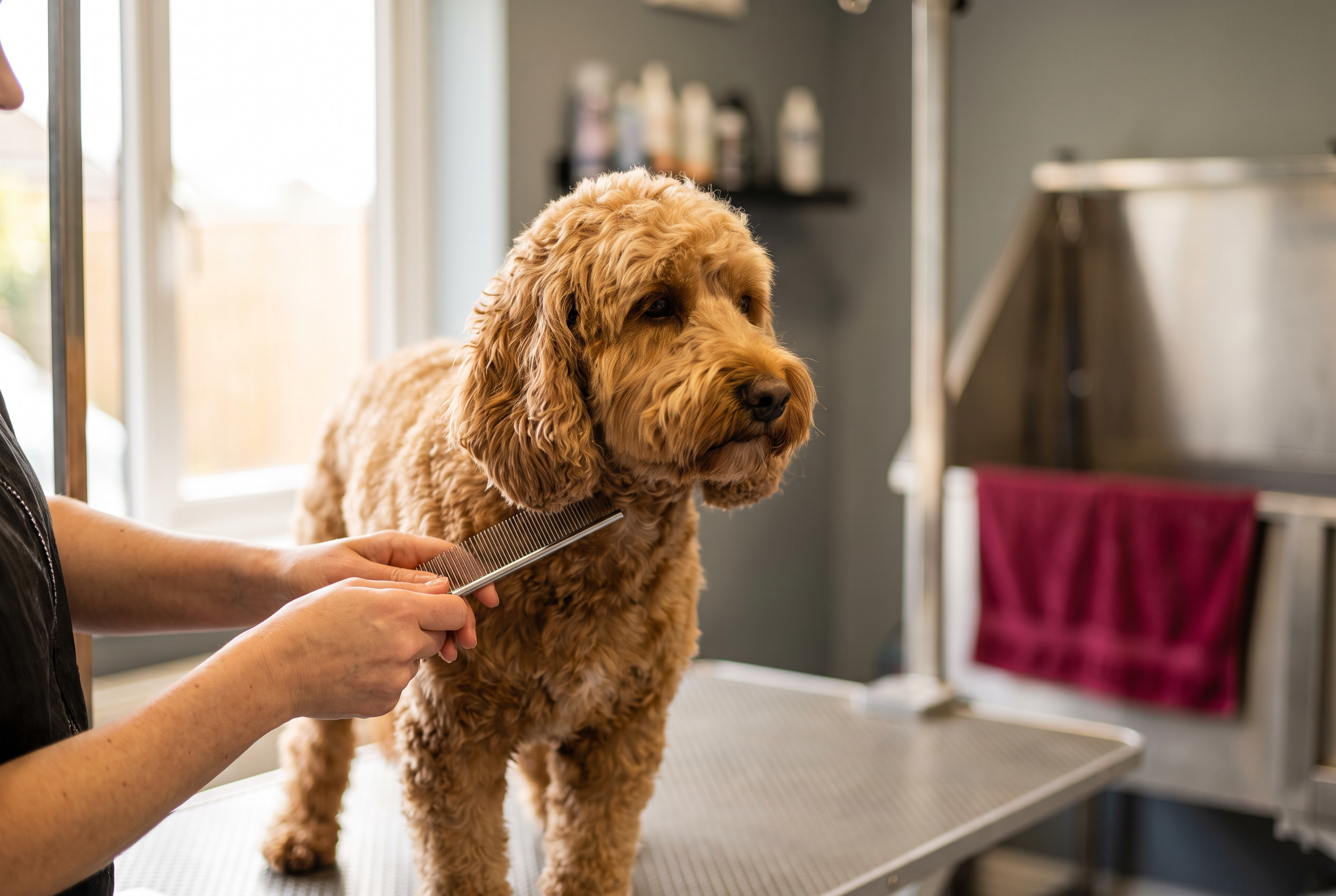
The 10 hardest dog breeds to groom at home
These are the hardest dog breeds to groom, and some coats are genuinely beyond a home groom. Here’s which breeds need a professional, why, and what you can do between appointments.
Home grooming works fine for plenty of breeds. But for some dogs, it’s not just difficult. It can cause real problems. Mats forming underneath the surface of the coat, skin hidden under thick fur that nobody’s checking, coats that get damaged by the wrong technique. Some breeds need more than you can give them at home, full stop.
Already know your breed is on this list? Find a professional groomer near you on Tuft.
Find a groomerPoodle mixes: Cockapoos, Cavapoos, Labradoodles, Goldendoodles
The number one breed on almost every groomer’s list. Poodle mix coats mat from the root up, which means a coat can look completely fine on the surface while being felted underneath. By the time most owners notice, a full clip-off is the only option.
“Owners don’t realise they need to be brushing with a comb as well as a brush. And they also need to be lifting the coat to brush it to make sure they are getting the undercoat.”
Avalon Doughty, Bubble and Squeak Animal Grooming“Poodle mix/cross breeds must absolutely get groomed, and it’s not easy to do from home.”
Lucy Baker, Shaggy and ChicBrush 4 to 5 times a week at home using both a slicker brush and a steel comb. Professional groom every 4 to 6 weeks. Less than this and you’re playing catch-up.
Always finish with a steel comb. If it snags anywhere, there’s a mat forming underneath the surface. A brush alone won’t find it.
Spaniel and Sprocker
Spaniels do what Spaniels do, which is run into every bush and hedge they can find. The coat collects everything and needs brushing in the direction it grows, including the chest, belly, and around the paws. Miss those spots and mats build quickly. They’re also, as groomers will tell you, not always cooperative about it.
“Spaniels can be very stubborn. One of my dogs is the sweetest girl around, but she doesn’t like to stand for anyone and is quite happy being a stubborn little lady.”
Avalon Doughty, Bubble and Squeak Animal Grooming“I love them but they can be one of the hardest breeds to keep still on a table.”
Julian Sandy, Woofterz Dog GroomingEar infections from damp fur that wasn’t dried properly after a bath. Always dry the ears thoroughly, including inside the ear flap. If you notice a smell or your Spaniel is shaking their head more than usual, that’s a vet visit.
Tire them out before you start. A long walk makes a real difference with a wriggly Spaniel. A second pair of hands helps more than any grooming tool.
Husky
Huskies have a dense double coat: a waterproof outer layer and a thick insulating undercoat. Without a high-velocity dryer and the right technique, the undercoat doesn’t come out properly. Matting follows, and so does skin trouble hidden underneath all that fur.
“You need a good blow out of the coat, and Huskies should get regular professional grooming.”
Jo Rumming, Jo’s Dog Shedd InShaving a Husky does not keep them cooler in summer. The double coat insulates against heat as well as cold. Shaving it can cause coat damage and skin problems. Don’t do it.
Brush every day during shedding season. A de-shedding rake gets more undercoat than a standard brush. But for a proper blow-out, you need a professional dryer.
Yorkie
Yorkshire Terriers have long, silky hair that grows continuously and needs brushing at least once a day, twice if you can manage it. They’re also feisty, and many have strong opinions about being groomed. The daily brushing sessions are a genuine challenge for a lot of owners, which is how the mats creep in.
“Pay particular attention to the ears, legs, tail, and neck where the harness or collar sits. Those are the spots that mat first.”
Julian Sandy, Woofterz Dog GroomingProfessional grooming every 6 to 8 weeks. The coat grows fast and without regular trims it becomes unmanageable quickly.
Lhasa Apso
Long, thick, and prone to matting all over. Lhasa Apsos need daily brushing to stay on top of the coat, and professional grooming every 6 weeks without fail. The coat grows continuously, picks up everything, and tangles quickly if brushing slips even for a few days. They’re also strong-willed, which makes home grooming feel like a negotiation you’re losing.
Section the coat before brushing and work through layer by layer from the skin outward. Surface brushing looks like it’s working but it’s not getting to where the mats actually start.
Bichon Frise
That powder-puff finish Bichons are known for requires scissoring skill that genuinely takes time to develop. Most home attempts result in an uneven coat that needs a professional to fix. The double coat also picks up everything outdoors and needs daily brushing to stay tangle-free.
Don’t let them air dry. Towel dry first, then finish with a hairdryer on a low setting while brushing through. Air drying sets tangles into the coat.
Maltese
Long, silky, and completely unforgiving if you skip a brushing session. With a full coat, Maltese need brushing every day. Even in a shorter style, every other day is the minimum. The coat mats quickly around the ears, legs, and belly, and the face needs regular cleaning around the eyes to manage tear staining. They’re small, which makes home grooming feel manageable. The coat doesn’t care how small the dog is.
Behind the ears and where the collar or harness sits are the spots that mat first and get missed most. Check those every time.
Pomeranian
Pomeranians have a thick double coat that needs regular brushing and seasonal de-shedding when they blow their undercoat. The coat also needs professional shaping to maintain its characteristic fluffy appearance, which is harder than it looks at home.
Never shave a Pomeranian down to the skin. It can cause post-clipping alopecia, sometimes called coat funk syndrome, where the coat doesn’t grow back properly. Always check with a professional groomer before taking significant length off the coat.
During shedding season, brush every day with a slicker brush followed by an undercoat rake. Outside of shedding, two to three times a week is usually enough.
Pekingese
The Pekingese coat is long and thick with a dense undercoat, which is demanding enough on its own. But the flat face adds another layer of difficulty. The skin folds around the face need regular cleaning to prevent irritation and infection, and many Pekingese don’t enjoy having their face handled, which makes this part tricky at home.
Professional grooming every 6 to 8 weeks, and daily attention to the facial folds in between. If the skin around the face looks red or smells musty, that’s a vet check rather than a grooming problem.
Clean the skin folds with a damp cotton pad every few days and dry them thoroughly. Moisture trapped in folds causes irritation fast.
Wheaten Terrier
Soft, wavy, and constantly growing. Wheaten Terriers don’t shed much, which sounds like a bonus, but it means the dead coat stays in and mats rather than falling out. The coat also needs trimming to a specific length to look right, which is genuinely hard to do well at home without training.
Professional grooming every 6 to 8 weeks. Daily brushing in between to stop the dead coat building up into something a professional will need a lot of time to sort out.
Because they don’t shed, it’s easy to underestimate how much brushing they actually need. Dead coat builds up in the undercoat and causes matting that isn’t visible from the surface.
Find a professional groomer near you
Search Tuft to find groomers across the UK. Book online, no phone calls needed.
The hardest dog breeds to groom: your questions answered
Which dog breeds need professional grooming?
The hardest dog breeds to groom are those with curly, wavy, or dense double coats, and they typically need professional grooming every 4 to 8 weeks. The most high-maintenance include Poodle mixes (Cockapoos, Cavapoos, Labradoodles, Goldendoodles), Spaniels, Huskies, Yorkies, Lhasa Apsos, Bichon Frises, Maltese, Pomeranians, Pekingese, and Wheaten Terriers. Almost any dog benefits from a professional groom a few times a year, even if home brushing is enough in between.
Can you groom a Cockapoo or doodle at home?
You can brush one at home, and you should, ideally every day using both a slicker brush and a steel comb. But keeping the coat in good shape long term requires professional grooming every 4 to 6 weeks. Doodle coats mat from the root, not the surface. Things can look fine on top while a mat is forming underneath. Without the right technique, most owners end up with a dog that needs a full clip-off because the coat is too far gone to save.
How do I know if my dog’s coat is matted?
Run a steel comb slowly through the coat from root to tip. If it snags, there’s a mat. A brush alone won’t find mats forming close to the skin. Other signs include clumps that feel denser or stiffer than the surrounding coat, skin that looks red or irritated underneath the fur, and a dog that flinches or pulls away when you touch certain areas. If you find mats you can’t brush out easily, take your dog to a groomer rather than trying to cut them out with scissors. Cat skin is thin and cat skin tears. So does dog skin.
How often should I take my dog to a professional groomer?
It depends on the breed. Poodle mixes, Bichons, Lhasa Apsos, Maltese, and Yorkies typically need grooming every 4 to 8 weeks. Spaniels are usually every 6 to 8 weeks. Huskies and other double-coated breeds can go longer between full grooms but benefit from regular de-shedding sessions. Ask your groomer at the first appointment. They’ll give you an honest recommendation based on your dog’s coat.
What happens if you don’t groom a dog that needs it?
Matting is the most immediate problem. Mats pull on the skin, cause pain, and can hide skin infections underneath. In bad cases the only option is a full clip-off, which is more distressing for the dog and more expensive than regular maintenance would have been. Double-coated breeds like Huskies can also develop skin problems if their undercoat isn’t properly managed. Regular grooming isn’t just about appearance.
Is it cheaper to groom your dog at home?
Sometimes, in the short term. But for high-maintenance breeds, the cost of proper tools adds up quickly, and without the right technique you often end up needing a professional rescue groom anyway. For most of the breeds on this list, home brushing between appointments is essential but it’s not a replacement for professional grooming. It’s what you do in between.
Can you shave a double-coated dog?
You shouldn’t shave most double-coated breeds at all. Shaving a Husky, Pomeranian, or similar breed can permanently damage the coat. The undercoat can grow back thicker than the topcoat, causing texture and colour changes, and in some cases the coat doesn’t grow back properly. The double coat also insulates against heat as well as cold, so shaving doesn’t keep them cooler in summer. Talk to a professional groomer before making any decisions about taking significant length off.