Should Dog Groomers Charge a Deposit? UK Guide 2026 | Tuft
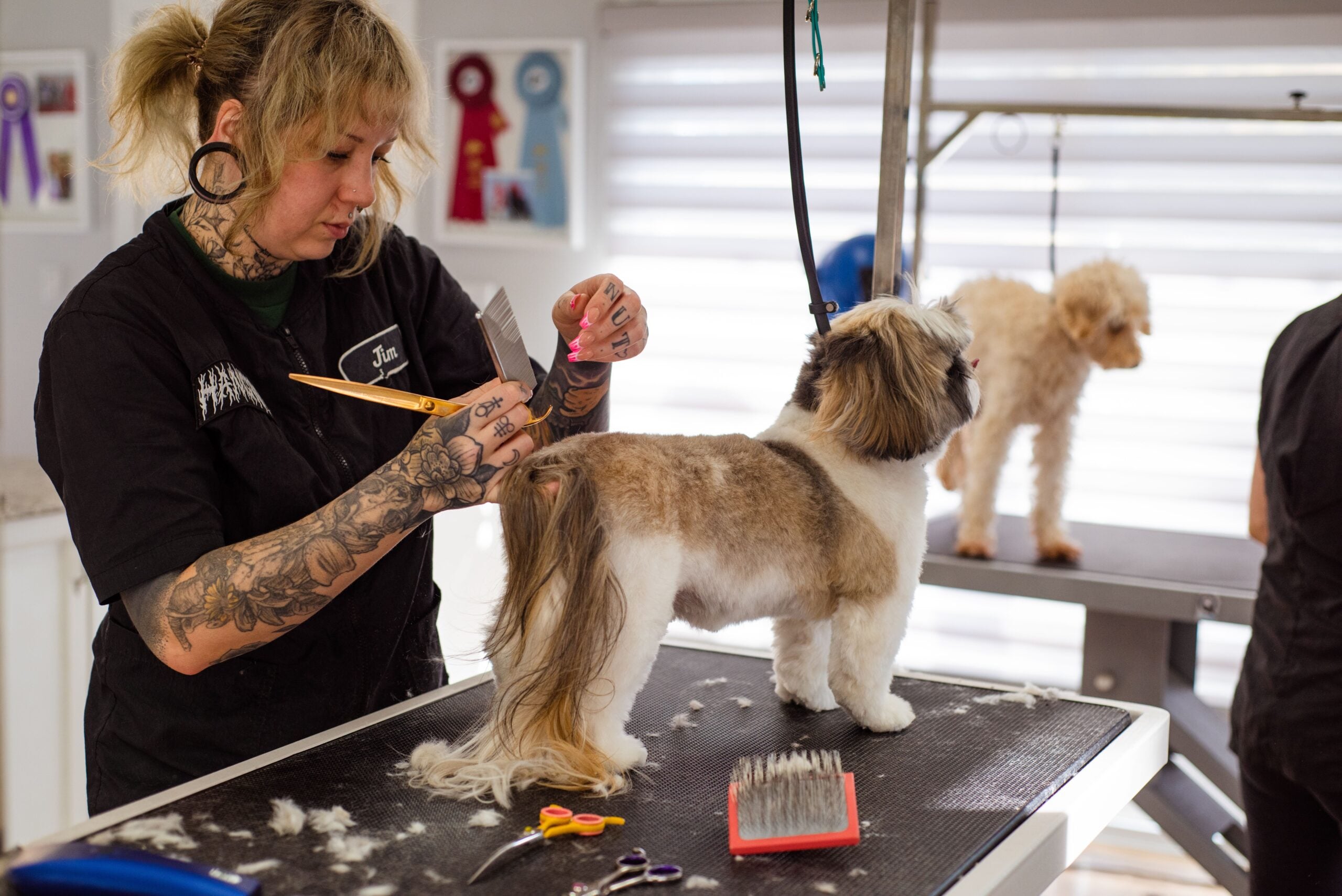
Should you charge a deposit? Here is what a no-show actually costs, what UK law lets you do, and when deposits are the wrong call.
Most UK dog groomers should charge a deposit, but not all of them. A no-show costs you the price of the groom plus an hour you can’t resell, which comes to roughly £2,860 a year if it happens once a week at the UK average of £55. Deposits normally run 20 to 50% of the groom price, or a flat £10 to £20, and have to be proportionate to be enforceable under the Consumer Rights Act 2015. The honest test is whether your no-show rate beats the value of the clients you’d shed, which works out at around six missed appointments a year per client lost. If your diary still has gaps, or you already lose almost nobody, a deposit will cost you more than it saves.
How we worked this out: price figures are averages from 15,029 real bookings processed through Tuft by UK groomers in January and February 2026. Groomers set their own prices, so these are market averages rather than Tuft’s rates. Legal points reference the Consumer Rights Act 2015, current CMA guidance and HMRC published policy, and are general information rather than legal or tax advice.
Here’s the thing nobody says out loud: taking a deposit feels like accusing your clients of something.
You’ve spent years building a client list on being the nice one. The groomer who fits people in, who doesn’t make a fuss, who knows the dog’s name and the owner’s kids’ names. Asking for money before you’ve done any work feels like it belongs to a different sort of business.
Then you sit in an empty salon on a Tuesday afternoon because someone forgot, and you think about it again.
This isn’t a pitch. Deposits genuinely aren’t right for every groomer, and there’s a section further down on exactly when to skip them. But if you’re going to decide either way, decide on the numbers rather than the nerves.
What does a no-show actually cost a dog groomer?
A no-show costs you the price of the groom plus the slot itself, which you can’t resell if you’re already fully booked. At the UK average of £55 for a full groom on a medium dog, one no-show a week comes to £2,860 a year. On an extra-large dog at £76 it’s £3,952.
Those averages come from 15,029 real bookings through Tuft in early 2026. Extra-small dogs average £42, small £48, medium £55, large £63, extra-large £76. London runs 20 to 40% higher.
Based on UK market averages from 15,029 Tuft bookings, February 2026.
Those aren’t dramatic numbers. They’re just a week’s holiday, or a new hydraulic table, or the difference between a comfortable January and a tight one.
Why a no-show costs more than the groom
If you’re fully booked, and most established groomers are, a no-show isn’t deferred income. You can’t make it up next week, because next week is already full.
It’s an hour gone. Or three hours, if it was a doodle.
That’s worth sitting with, because it flips the whole thing. A Goldendoodle full groom takes two to three hours. So your most expensive no-show is also your longest empty slot. A £42 Chihuahua costs you forty-five minutes. A £76 doodle costs you an afternoon, and you turned two other dogs away to keep it free.
Mobile groomers, add the fuel and the drive. You’ve spent forty minutes getting to a driveway with nobody in.
It’s the same shape of problem as the calls you miss mid-groom. One is a client who never made it into the diary. The other is a client who made it in and didn’t turn up. Both cost you a slot you’d already committed.
Not sure what your average groom is worth? Our free pricing calculator works out your rates by service, size band and coat type, so you know exactly what an empty slot costs you.
Try the free calculatorDeposit, card on file, or cancellation fee?
A deposit takes part of the payment upfront and keeps it if the client doesn’t show. A card on file takes nothing upfront but lets you charge the full value of the slot afterwards. A cancellation fee is invoiced after the fact and is the weakest of the three, because you still have to get someone to pay it.
Money upfront, held against the slot
- Client pays part of the price when they book
- Comes off the final bill, so it isn’t an extra charge
- Kept if they cancel late or don’t turn up
- Protects you only up to the deposit amount
- Familiar to clients and easy to explain
Nothing taken unless they no-show
- Card stored securely at the point of booking
- No money leaves their account upfront
- Lets you charge the real value of the slot
- Better fit for long grooms and high-value slots
- Needs a payment provider behind it
The cancellation fee is the one to be careful with. It reads as strict on your terms page, but chasing someone for £25 they’ve already decided not to pay is a horrible job and most groomers quietly don’t do it. An unenforced policy is worse than no policy, because your clients learn it’s decorative.
Card on file is the meaningful upgrade. A £15 deposit on a £55 groom still leaves £40 on the table. Card on file closes that gap, and “nothing’s taken unless you don’t turn up” is an easier sentence to say than “pay me now.” It does need payment processing behind it, so it’s a feature of your booking software rather than something you can set up on your own.

Most UK groomers land on 20 to 50% of the groom price, or a flat £10 to £20.
How much deposit should a dog groomer charge?
UK dog groomers typically charge either 20 to 50% of the groom price, or a flat £10 to £20. With the UK average full groom at £55 for a medium dog, that puts most deposits somewhere between £11 and £27. New clients and long grooms usually warrant more, established regulars less.
Flat amounts are easier to say out loud. “It’s fifteen pounds to book” is a sentence you can get through without wincing. Percentages scale better if you’ve got a wide spread between a Jack Russell and a Standard Poodle.
| Client type | Suggested deposit | Why |
|---|---|---|
| New clients | 50% to full prepayment | No-shows cluster heavily in first appointments. There’s no relationship yet and nothing invested. |
| Long grooms | Higher flat amount, or 30% plus | If you’re holding three hours for a doodle, a £10 deposit isn’t protecting three hours. |
| Established regulars | Small flat amount, or none | They’ve earned the trust. You don’t have to apply the same rule to everyone. |
| Repeat offenders | Full prepayment | Applied quietly, without an announcement. You’ll know who they are. |
Working out a percentage means knowing your prices are right first. Our UK pricing guide has real market averages by size, breed and city from 15,029 bookings.
See UK grooming price dataAre non-refundable deposits legal in the UK?
Yes, but only if the term is fair. Under the Consumer Rights Act 2015, a deposit you keep has to be proportionate to what you actually lose. Schedule 2 of the Act lists deposits specifically as a term that can be challenged, so a modest amount kept on a genuine late cancellation is defensible while a blanket “non-refundable in all circumstances” clause is the kind that gets struck out.
Most posts about deposits skip this entirely, or they’re American and talk about state law that doesn’t exist here. It’s worth two minutes.
Fair, in practice, means proportionate. A deposit should reflect a genuine estimate of what you lose, not punish someone for changing their mind. The CMA’s position is that terms are more likely to hold up where they put strict and narrow limits on when a client loses money, and where you only keep an amount reflecting costs you’ve actually incurred.
So a £15 deposit on a £55 groom, kept when someone cancels the night before, is defensible. Keeping the whole lot when someone cancels three weeks out is not.
Worth knowing: the CMA published updated guidance on unfair contract terms in July 2026, replacing the version in place since 2015, and it now has direct enforcement powers under the Digital Markets, Competition and Consumers Act 2024. No solo groomer is going to attract a CMA investigation, so don’t panic. But a policy you copied off someone in 2019 is worth a fresh look. The full guidance is on gov.uk.
Two practical rules come out of all this. Show the policy before they book, not after. And be able to explain why the number is the number.
A cancellation policy template you can copy
A workable dog grooming cancellation policy needs five things: the deposit amount, the notice window, what happens inside and outside that window, a lateness rule, and a line acknowledging genuine emergencies. Here are two versions, free to copy and adapt.
The short one goes on your booking page or in your confirmation message. The long one goes on your website or in your new client welcome pack. Fill in the brackets with your own numbers, and don’t leave them in, we’ve all seen the business that posted a template with the placeholders still showing.
Short version
For your booking page, confirmation message or social bio.
Your appointment is confirmed once a [£X] deposit is paid. It comes off your final bill.
Need to move or cancel? Just give us [48] hours and your deposit moves with you.
Under [48] hours, or a missed appointment, and the deposit covers the slot we couldn’t fill.
Life happens. If something’s gone wrong, tell us and we’ll sort it out.
Full version
For your website terms page or new client welcome pack.
Booking your appointmentWe ask for a [£X or X%] deposit to hold your slot. It comes off the price of the groom, so you’re not paying extra, just paying some of it earlier.
Moving your appointmentGive us [48] hours’ notice and we’ll move your deposit across to your new appointment. No charge, no fuss. [One free move per booking.]
Late cancellations and missed appointmentsWith less than [48] hours’ notice we usually can’t fill the slot, so the deposit is kept. If you don’t turn up and we haven’t heard from you, the same applies.
Running lateIf you’re more than [15] minutes late we may need to shorten the groom or rebook you, as it pushes every dog after yours back. We’ll always try to fit you in first.
Matted coatsIf your dog arrives significantly matted, dematting takes considerably longer and isn’t always possible without clipping short. We’ll talk you through the options before we start, and there may be an additional charge of [£X to £X] depending on how much work is involved.
When something’s gone wrongIllness, emergencies, a poorly dog. These things happen and we’re not robots. Get in touch and we’ll move your deposit across.
Why we do thisWe’re a small [salon or mobile] business and every slot is booked by hand. An empty hour is an hour we’ve turned someone else away for. Deposits keep the diary honest, which is how we keep prices fair.
That last paragraph is the one that stops the whole thing reading as a telling-off. Most policies explain the rule and never explain the reason, and the reason is the bit clients actually accept.
How to tell long-standing clients about a deposit
Give four to six weeks’ notice, the same as you would for a price increase, and frame it as a change to how the diary works rather than a response to anything a client has done. Announce it once, in writing, to everyone at the same time, and apply it consistently from the date you said.
This is the part everyone dreads, and it’s mostly dreaded out of proportion. You’re not accusing Sandra of being unreliable. You’re explaining how the booking system now works for everyone.
Three mistakes to avoid
- Apologising for it. “Sorry, I know it’s annoying, but I’ve had to start doing this” invites an argument. State it as a fact of the business, warmly.
- Making it obviously aimed at someone. If you announce it a week after a particular client let you down, everyone will work out who it’s about, including them.
- Announcing it and then not doing it. The worst of both. You’ve had the awkward conversation and got none of the benefit.
Copy this for your mailout:
Hi [name], a small change to how bookings work from [date]. I’m now taking a [£X] deposit when you book, which comes straight off your bill on the day. Nothing else changes, and if you ever need to move an appointment just give me [48] hours and the deposit moves with you. It’s purely so I can keep the diary running properly. Thanks for bearing with me, and give [dog’s name] a scratch from me.
You can also skip it entirely for a handful of clients who’ve never once let you down in eight years. Nobody is checking. A policy that exists for new clients and quietly doesn’t apply to your most loyal ten is still a working policy.
What to do when someone cancels for a genuine reason
Move the deposit rather than refunding it. Carrying it across to their next appointment keeps them booked, keeps your slot filled, and costs you nothing, where a refund ends the transaction entirely. Waiving the charge for real emergencies makes the policy stronger, not weaker.
A policy you occasionally set aside proves you’re a person rather than a set of terms. The dog was sick. The client’s mum went into hospital. The van wouldn’t start. These aren’t people gaming you.
You’ll get the odd person who has a genuine emergency every single time. You’ll know who they are within about three months, and you can quietly move them to full prepayment without a conversation.
Clients who reliably turn up rarely object to a deposit, because it comes off their bill either way.
Do deposits actually lose you clients?
Yes, some. The question is whether the no-shows you prevent are worth more than the clients you shed. A regular client on a six to eight week cycle is worth around £350 a year, and a single no-show costs you £55, so losing one loyal client wipes out roughly six prevented no-shows.
Anyone telling you deposits cost you nothing is selling something. Here’s the arithmetic, and it’s the calculation nobody in this industry publishes.
If a deposit policy sheds one loyal client and prevents fewer than six missed appointments a year, you’re worse off. Not morally, financially.
That’s the real test, and it’s why the answer isn’t the same for everyone. If you’re getting one no-show a month, the maths is overwhelmingly in favour and it isn’t close. If you get three a year, it’s genuinely marginal and worth thinking harder about.
The reassuring part: in practice the clients you lose are mostly the ones who were already costing you. People who reliably turn up don’t object to a deposit, because a deposit costs them nothing. The person who’s furious about a £15 holding fee is very often the person who was going to be the problem.
Groomers using deposit rules on Tuft see no-shows drop by up to 81%. But the number that should decide it for you is your own no-show rate, not ours.
When a deposit isn’t right for you
Skip the deposit if your diary still has gaps, if your no-show rate is already very low, if you work in a small community where the reputation cost outweighs the money, if you can genuinely fill cancellations from a waiting list, or if you know you won’t enforce it.
You’re still building your client list
If your diary has gaps, your problem isn’t no-shows, it’s bookings. Adding friction when you need every enquiry to convert is the wrong move at the wrong time. Get busy first, then protect the diary. If that’s where you are, our guide to starting a dog grooming business in the UK covers getting those first clients in.
Your no-show rate is already low
Run the numbers above. If you’ve had two no-shows this year, you’re solving a problem you don’t have, and you’ll spend more in awkward conversations than you’ll save.
You work in a small community where reputation travels
Village, small town, tight-knit area where everyone knows everyone. The gossip cost of being the groomer who “wants money upfront” can genuinely outweigh the financial benefit. You know your own patch better than any blog post does.
You can fill cancellations from a waiting list
If you’ve got twelve people who’d take a slot at four hours’ notice and you can actually reach them quickly, a no-show is an inconvenience rather than a loss. Worth being honest about whether that list is real or theoretical.
You won’t enforce it
This is the big one. If you know, in your heart, that you’ll wave it through every single time someone looks upset, don’t introduce it. You’ll have taken on all the awkwardness and none of the protection, and you’ll have taught your clients that your policies are suggestions.
No shame in any of these. Deciding not to take deposits, for a reason, is a business decision. Not taking them because you’ve never thought about it is the thing worth fixing.
Deposit rules, built in
Tuft handles deposits, card on file and automated reminders on the free Essential plan. No card needed, no booking caps, no time limit.
Start for freeDeposit questions groomers ask most
Should you charge one at all
Should dog groomers charge a deposit?
Most should, but not all. A deposit makes financial sense when your no-show rate is high enough that the appointments you protect outweigh the clients you lose. As a rough test, one regular client is worth around £350 a year and one no-show costs around £55, so losing a loyal client cancels out roughly six prevented no-shows.
If your diary is full and you’re losing an appointment or more a month, the case is strong. If you’re still building a client base, or you only get two or three no-shows a year, a deposit is likely to cost you more than it saves.
Will taking a deposit lose me clients?
Some, yes, though usually not the ones you want to keep. Clients who reliably turn up aren’t affected by a deposit, because it comes off their bill either way. The pushback tends to come from people who were already unreliable. The exception is a new groomer with gaps in the diary, where losing any enquiry hurts.
How much deposit should a dog groomer charge?
Either 20 to 50% of the groom price, or a flat £10 to £20. With the UK average full groom at £55 for a medium dog, that puts most deposits in the £11 to £27 range. Flat amounts are easier to explain, and percentages scale better if you groom everything from Chihuahuas to Standard Poodles. Charge more for new clients and for long grooms.
The legal and tax side
Are non-refundable deposits legal in the UK?
Yes, if the term is fair. Under the Consumer Rights Act 2015 a deposit you keep has to be proportionate to what you actually lose, and Schedule 2 of the Act lists deposits as a term that can be challenged. Keeping a modest deposit on a genuine late cancellation is defensible. A clause saying all payments are non-refundable in all circumstances is the kind that gets struck out.
Do I have to refund a deposit if a client cancels?
It depends on your policy and whether that policy is fair. Keeping a modest deposit on a late cancellation, where you genuinely can’t refill the slot, is usually defensible. Keeping money when someone cancels three weeks out, with plenty of time to rebook the slot, is much harder to justify.
Do I charge VAT on a deposit?
If you’re VAT registered, yes. VAT is due when you receive the deposit, and since HMRC’s policy change on 1 March 2019, output tax stays due on retained payments even when the client never turns up. You can’t adjust it back afterwards. If you refund the deposit, no VAT is due on it.
Most solo groomers aren’t VAT registered, since the threshold is £90,000 turnover, so this won’t apply to everyone. HMRC’s Revenue and Customs Brief 13 (2018) has the detail.
What if a client disputes the charge with their bank?
You’ll need to show that your policy was visible and accepted before they booked, that the appointment was held and not resold, and that you communicated about it. Screenshots of your booking page terms, the confirmation message they received, and your message history all help. Keeping deposits modest and your wording clear is the best protection, because a proportionate charge with a clear paper trail is far easier to defend than a large one.
Writing and running the policy
What notice period should a dog grooming cancellation policy use?
Forty-eight hours is the most common in UK grooming, with twenty-four hours as the minimum. The right window is however long you realistically need to refill a slot. If you can fill a cancellation same-day from a waiting list, twenty-four hours is plenty. If your diary is booked six weeks out, forty-eight gives you a fighting chance.
What if a client is just late rather than a no-show?
Lateness is a separate rule and it’s worth writing down. A fifteen minute grace period is common, after which you either shorten the groom or rebook. The reason to be firm is that lateness doesn’t just affect that dog, it pushes every appointment after it back. Most clients accept this readily when you explain it that way.
Can I charge a no-show fee without taking a deposit?
You can write it into your terms, but collecting it is another matter. Without a deposit or a card on file, you’re relying on someone voluntarily paying for something they didn’t receive. Most groomers find they don’t chase it. If you want protection rather than the appearance of protection, hold something at the point of booking.
Should new clients pay a bigger deposit than regulars?
Usually yes. No-shows cluster in first appointments, where there’s no relationship yet and the client has nothing invested. Plenty of UK groomers take full payment upfront from new clients and a smaller holding deposit from regulars. You don’t need to publish the difference, you just need to apply it consistently.
If you take one thing from this: work out your own no-show rate before you decide. The number that matters is yours, not ours, and it’s the only thing that tells you whether this is worth the awkward conversation.